
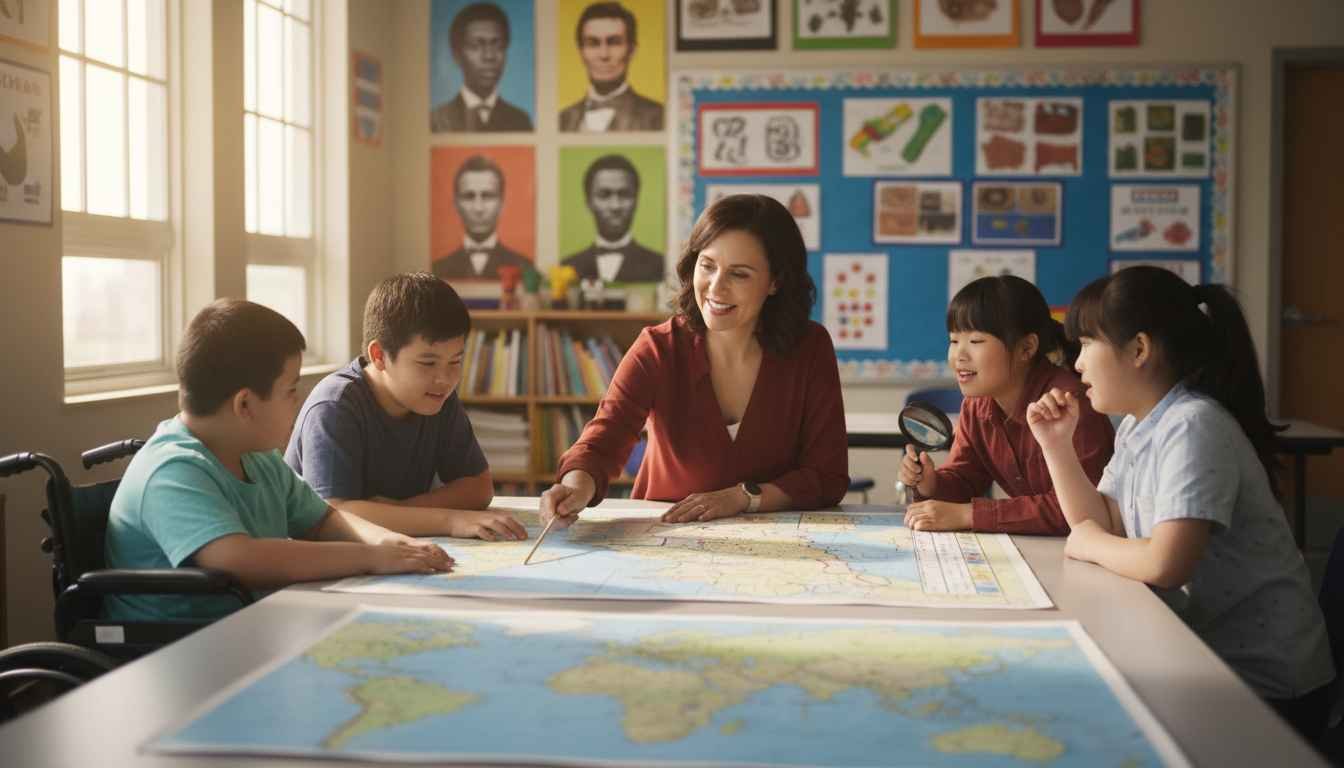
The simple answer is No, but achieving meaningful social studies progress for students in special education is not only possible – it’s a hidden treasure trove of strategies waiting to be unlocked. Social studies is more than memorizing dates and capitals; it’s about building critical thinking, understanding societies, and fostering the skills necessary for real-world engagement. For students with diverse learning needs, these goals require intentionality, creativity, and measurable outcomes that inspire growth rather than just compliance.
Behind the scenes, many educators assume that social studies goals must mirror those in general education classrooms. However, specialized instruction proves that tailoring objectives to individual abilities amplifies learning. The process involves analyzing each student’s strengths, weaknesses, and interests, then converting abstract concepts like civic responsibility or historical patterns into concrete, achievable steps. This is where a structured, strategic approach shines.
Unlocking Cognitive and Social Growth Through Social Studies
Social studies for special education students is not a side subject; it’s a cornerstone for cognitive development. The secret is to break down broad standards into skill-based objectives. For instance, rather than expecting a student to understand the entirety of government structures, focus on recognizing community roles and responsibilities. This scaffolding builds confidence and mastery while laying the groundwork for more complex concepts later on.
Pro Tip: Start with what students can relate to in their daily lives. A practical understanding of family, neighborhood, and community creates a bridge to larger historical or societal lessons.
Essential Social Studies Goals for Special Education
1. Understanding Community and Roles
Students should be able to identify basic community roles such as teachers, firefighters, and local leaders. The goal here is to cultivate awareness and respect for civic functions. Using role-play or visual aids can dramatically enhance comprehension. Progress can be measured through verbal recognition, matching exercises, or participation in community simulations.
2. Recognizing Historical and Cultural Diversity
Cultural awareness is vital. Students can be guided to appreciate differences in traditions, clothing, food, and languages. Simple projects such as “culture boxes” or digital presentations allow students to explore and share diverse perspectives. Tracking growth might include participation, the ability to describe cultural elements, or collaborative group reflections.
3. Developing Basic Map and Geography Skills
Even basic spatial awareness has long-term benefits. Goals may include identifying countries, states, or continents, understanding cardinal directions, or interpreting simple maps. Tactile maps, interactive apps, and storytelling can make geography tangible. Assessment can be done through matching activities, map labeling, or locating landmarks on a globe.
4. Civic Understanding and Decision-Making
Students in special education can grasp fundamental civic concepts such as voting, rules, and fairness. Interactive simulations of voting or classroom governance encourage practical learning. Goals should focus on demonstrating understanding of cause-and-effect in civic processes, decision-making, and the consequences of choices.
5. Critical Thinking and Problem Solving
Social studies isn’t just about absorbing information; it’s about interpreting it. Goals should include comparing historical events, evaluating consequences, or identifying similarities and differences in cultural practices. Graphic organizers, guided discussions, and simplified case studies help scaffold this process for learners who need structured support.
Integrating Social Studies With Other Learning Objectives
For maximum impact, social studies goals should overlap with literacy, communication, and life skills goals. For instance, writing a short reflection on a historical figure reinforces reading comprehension, vocabulary, and social awareness simultaneously. This multi-disciplinary approach creates efficiencies, making every lesson meaningful. Many educators have reported that students retain knowledge better when social studies content intersects with practical life skills and language development.
To see real examples of these approaches in action, resources like Genealogy Explained provide guidance on connecting historical and family contexts with student learning objectives, adding both relevance and engagement.
Assessment and Measurable Outcomes
Setting social studies goals is only half the battle; measuring progress is equally critical. Standardized tests often fall short, so alternative assessments are key. Portfolio reviews, visual projects, oral presentations, and hands-on activities provide a comprehensive picture of a student’s growth. Each assessment should directly link to a goal, ensuring that progress is tangible and meaningful.
Pro Tip: Incorporate student self-assessment. Encouraging students to reflect on what they learned not only reinforces concepts but builds confidence and autonomy.
Potential Drawbacks and Who Should Avoid This
It’s important to acknowledge that not all students may respond immediately to standard social studies frameworks. Highly abstract or complex topics may overwhelm certain learners, leading to frustration. Educators should avoid pushing content too quickly or without adequate scaffolding. Additionally, schools without access to specialized materials or trained staff may struggle to implement these goals effectively. Understanding limitations ensures interventions are both realistic and respectful of student needs.
Maximizing Engagement and Motivation
Excitement in social studies is not accidental; it comes from hands-on experiences, storytelling, and meaningful connections. Using real-world examples, simulations, and projects fosters engagement. Incorporating technology such as interactive maps, videos, and digital timelines also increases retention. The secret here is personalization: when students see themselves reflected in the lessons – through family histories, local events, or personal interests – they are more motivated to learn and participate.
Conclusion: Crafting a Path to Social Understanding
Social studies goals for special education are not rigid; they are dynamic pathways that adapt to student potential. By focusing on community awareness, cultural diversity, civic understanding, critical thinking, and interdisciplinary learning, educators can create a comprehensive, measurable, and exciting framework. Every lesson becomes an opportunity to instill knowledge, build life skills, and prepare students for active participation in society. Behind the scenes, success is achieved through thoughtful planning, ongoing assessment, and relentless attention to individual student needs. The result is a transformative educational experience that goes beyond textbooks to shape engaged, thoughtful, and capable citizens.
