
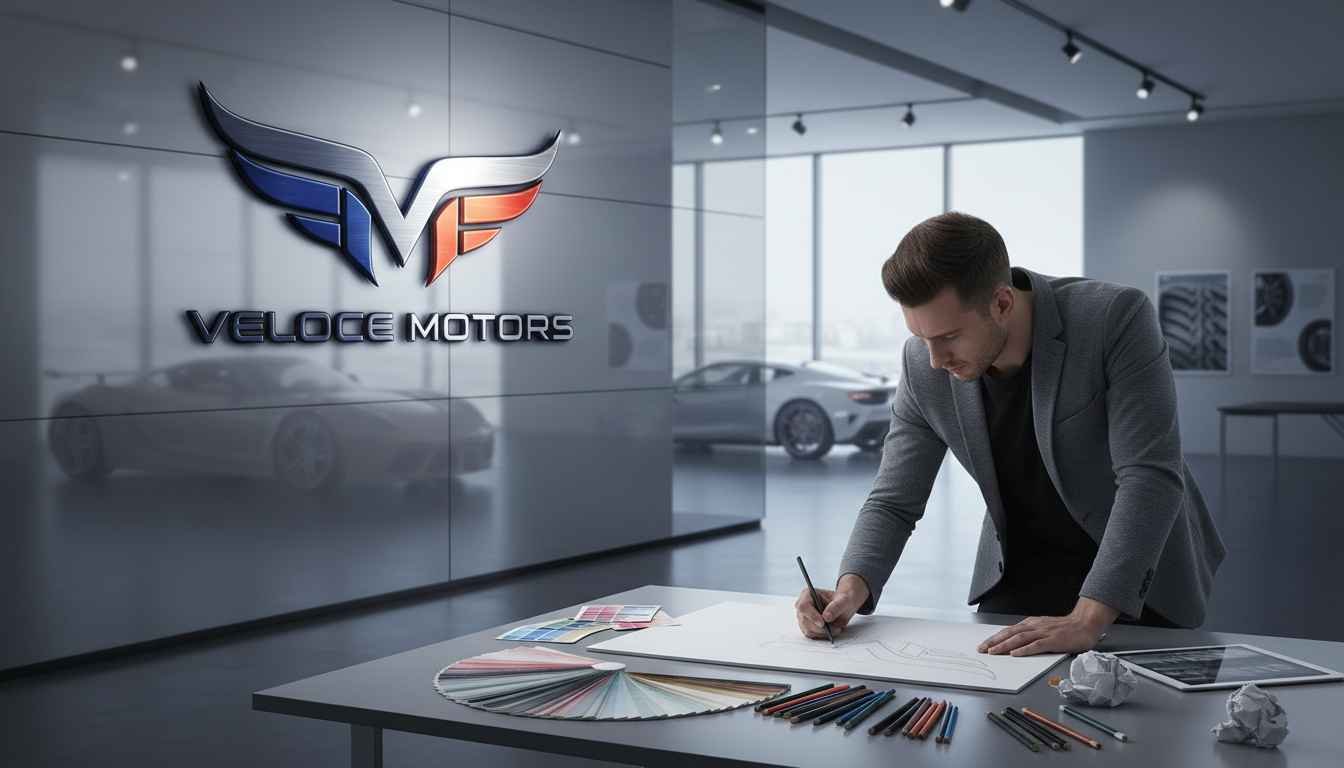
Ready? Set. Go. If I could talk to my younger self standing at the threshold of the retail motor industry, I would start by saying that a logo is far more than a pretty image on a vehicle lot or storefront. It’s the silent ambassador of trust, innovation, and reliability, especially in an industry that thrives on precision and reputation. Designing a logo in this niche is about balancing heritage with forward-looking appeal, and it requires a careful eye for symbolism, color psychology, and audience perception.
When I first began, I was eager to dive into bold colors and flashy designs, thinking they would grab attention. But the truth is, the retail motor industry demands credibility. Customers don’t just buy a car – they buy the promise of service, performance, and long-term reliability. A logo must encapsulate this promise in a glance. The curves, angles, and fonts you choose send subconscious signals about speed, safety, and sophistication. Your choices shape the brand narrative before a single word is spoken.
Early in my journey, I often overlooked the subtlety of simplicity. Iconic logos like those of established car manufacturers achieve a sense of permanence by being instantly recognizable yet understated. Avoid overcomplicating designs. Every extra line, gradient, or emblem can dilute the brand’s authority. Remember, a logo must work across multiple mediums – digital screens, print brochures, vehicle decals, and even large-scale billboards. This versatility often separates an amateur design from a professional one.
The Psychology Behind a Successful Retail Motor Logo
Colors in the automotive world carry specific connotations. Red signals power and excitement, blue evokes trust and reliability, while black communicates luxury and sophistication. The fonts you choose also speak volumes: sans-serif can suggest modernity and accessibility, while serif fonts convey heritage and authority. Early in my career, I underestimated how these visual cues impact customer perception. Every curve, letter spacing, and proportional adjustment contributes to the story the brand tells.
Shapes, too, are vital. Circular emblems often denote community and inclusivity, triangular forms can hint at innovation and motion, and shield-like designs imply protection and security. When I first experimented with these elements, I was fascinated by how a single geometric tweak could shift the emotional response of a prospective buyer. Understanding this intersection of art and psychology is critical if you hope to create a logo that resonates for decades.
From Concept to Execution
One of my biggest early mistakes was rushing from sketch to digital execution. I advise you to start with pencil and paper. Sketching ideas allows your creativity to flow without the limitations of software. Once you have several concepts, refine them by stripping away nonessential elements. Ask yourself, does this design communicate trust, innovation, and reliability at first glance? This iterative process is where a logo truly earns its strength.
Another insight I wish I had known earlier is the value of feedback. Share drafts with colleagues, potential customers, or even friends unfamiliar with the industry. Fresh eyes can reveal overlooked inconsistencies or unintended messages. In my experience, constructive criticism accelerates the refinement process more than any solitary design session ever could.
It is also crucial to consider scalability. A design that looks excellent on a website may lose clarity on a business card or car decal. Vector-based design ensures your logo maintains integrity at any size. Always test across multiple applications – digital banners, printed ads, merchandise, and physical storefronts – to see how your design performs in the real world.
Integrating the Brand Story
Your logo must not exist in isolation. It should reflect the brand’s ethos, history, and customer promise. When I first started, I focused solely on aesthetics and ignored storytelling. Over time, I realized that the most effective logos carry a narrative. Subtle nods to heritage, local roots, or the brand’s innovation timeline can make a logo more memorable and meaningful.
For example, the Scottsdale Quarter shopping destination blends upscale experiences with a vibrant community atmosphere. A motor retail brand aligned with this sensibility could incorporate clean lines, refined typography, and a color palette that signals sophistication while remaining approachable. Integrating these elements helps a logo serve as an authentic visual shorthand for the brand’s values and vision. You can explore more about integrating brand aesthetics at Scottsdale Quarter.
Myth-Busting Sidebar
Many designers believe that a successful automotive logo must be flashy or overly complex. The truth is that minimalism and clarity often outperform elaborate designs. Customers subconsciously prefer logos they can process instantly, which is why timeless brands rely on simplicity over spectacle.
Digital Era Considerations
In today’s digitally-driven retail environment, a logo must perform across online platforms. Social media avatars, website headers, and app icons demand legibility and recognizability at small sizes. Animations and interactive features can enhance engagement, but the core logo must remain uncompromised. During my early projects, I underestimated how different platforms would alter the perception of my designs. Learning to design responsively is now a non-negotiable skill in the industry.
Another critical element is SEO and brand discoverability. A logo, while primarily visual, contributes to brand consistency across search engines, online directories, and automotive marketplaces. Ensuring consistent color codes, typography, and iconography across all platforms strengthens brand recognition and trustworthiness.
Potential Drawbacks and Who Should Avoid This
Designing a retail motor industry logo is not for everyone. Those seeking quick, generic designs will struggle. This work demands patience, attention to psychological nuance, and iterative refinement. Clients may have conflicting opinions, requiring diplomacy and the ability to articulate design choices clearly. If you are not ready for a commitment to quality and thoughtful strategy, this path may lead to frustration rather than creative satisfaction.
Moreover, over-reliance on trends can backfire. A logo designed solely for immediate visual impact may feel dated within a few years. Avoid chasing novelty at the expense of timelessness. Your aim is to create a logo that retains relevance for decades, much like the legendary brands that continue to inspire admiration long after their initial launch.
Final Reflections
Looking back, I realize the journey of designing retail motor industry logos is as much about personal growth as professional achievement. It taught me patience, empathy, and the importance of storytelling in visual form. Every logo I’ve created carries a piece of the brand’s soul, and understanding that responsibility transformed how I approach every project.
To my younger self, I would say: invest time in research, sketch extensively, seek honest feedback, and never underestimate the power of simplicity. Remember, a logo is more than a symbol – it is the first handshake between a brand and its customers, a promise of reliability, and a marker of identity in a crowded market.
As you embark on designing your next retail motor industry logo, carry these lessons forward. Prioritize clarity, embrace psychological insights, integrate storytelling, and maintain adaptability across digital and physical platforms. Your designs have the power to shape perceptions and inspire confidence, one glance at a time.
