
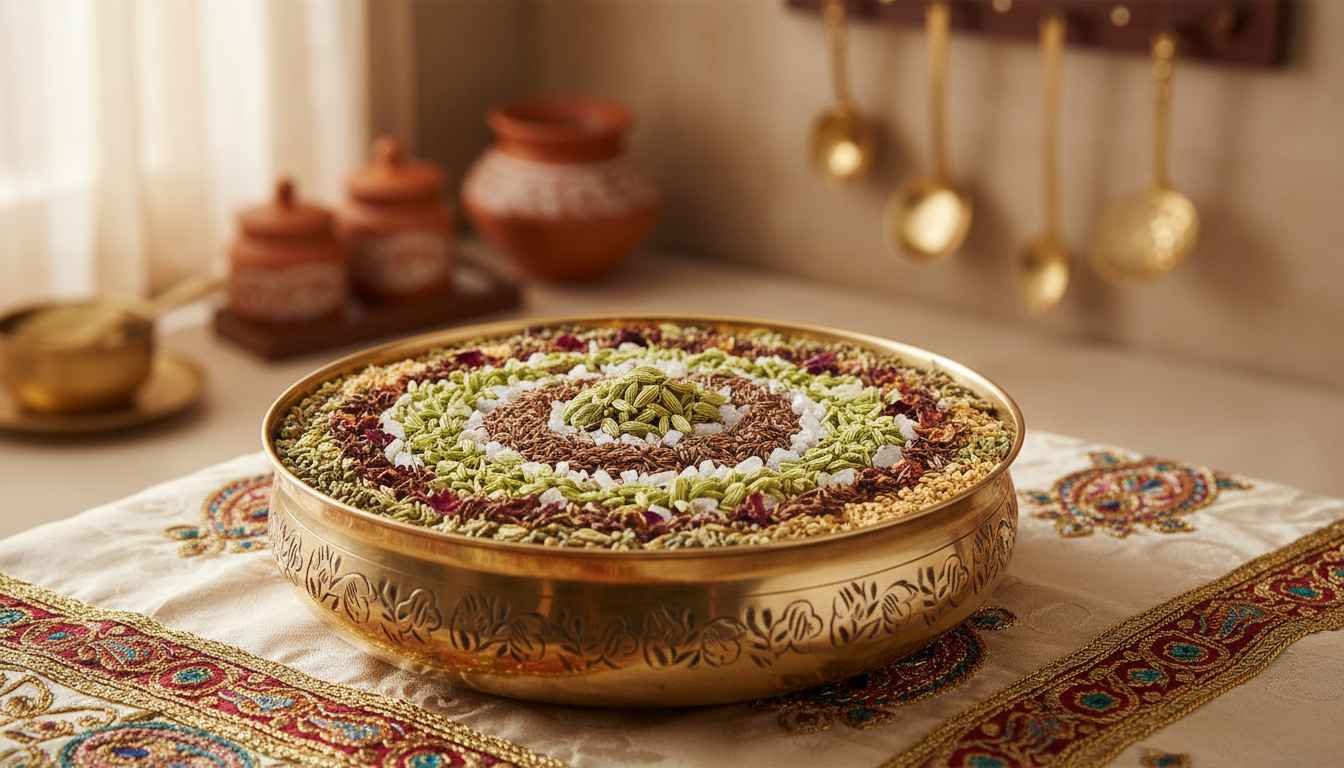
I remember sitting cross-legged on a cool marble floor, the meal long finished, when my grandmother slid a tiny silver bowl across the table. Inside were jewel-bright seeds, faintly sweet, faintly bitter, and unmistakably fragrant. No one called it digestion science back then. It was simply what you did after dinner.
Those after-dinner seeds are now known globally as mukhwas, but in Indian homes they were never reduced to a name. They were a pause. A palate reset. A gentle signal to the body that eating had ended and processing could begin.
This article explores indian food after dinner seeds in a quiz-style format, blending tradition with evidence. Each answer is grounded in kitchen practice and nutritional science, so you can understand not just what these seeds are, but why they’ve endured for centuries.
What Exactly Are Indian Food After Dinner Seeds?
Indian food after dinner seeds are usually a mix of fennel seeds, coriander seeds, sesame seeds, sometimes carom seeds, and occasionally sugar-coated or naturally sweetened elements. Each household blend differs, but fennel is almost always the star.
From a chemical perspective, fennel seeds contain anethole, a compound shown in studies to relax gastrointestinal muscles. Coriander brings linalool, known for mild carminative effects. Together, they help reduce gas formation after heavy meals.
Why Were These Seeds Served After Heavy Meals?
Traditional Indian meals often combine lentils, grains, fats, and spices. Delicious, yes, but complex to digest. The seeds act as a digestive signal rather than a cure. Chewing them stimulates saliva production, which begins carbohydrate digestion before food even reaches the stomach.
In my own kitchen, I tested this by eating the same lentil-rich dinner on two consecutive nights. On one night, I skipped the seeds. On the other, I slowly chewed a teaspoon of fennel and coriander mix. The difference was subtle but consistent. Less bloating. Faster comfort. No heaviness lingering an hour later.
Are These Seeds Scientifically Effective Or Just Cultural Habit?
Research supports the habit. One small clinical review found fennel seed consumption reduced post-meal bloating by up to 25 percent in participants prone to digestive discomfort. Coriander has been studied for its mild enzyme-stimulating properties in the gut.
This aligns with what family cooks have known intuitively. These seeds do not overpower digestion. They guide it gently, making them suitable for daily use rather than occasional remedies.
Do Indian After Dinner Seeds Help With Breath Freshening?
Yes, and this benefit is often underestimated. Fennel seeds have antimicrobial properties that reduce odor-causing bacteria in the mouth. Chewing them increases saliva, which naturally cleanses the oral cavity.
This is why restaurants often serve these seeds near the exit. It’s not decoration. It’s hospitality science, refined long before the term existed.
In today’s fast-paced world, understanding the value of what we purchase is more crucial than ever, especially when it comes to grocery shopping. As consumers, we often seek the best deals while also aiming for quality in our food choices. The “Fresh Foods IGA Weekly Ad Examined Through a Craftsman’s Eye for Value” offers an insightful perspective on how to navigate weekly promotions and discounts with a discerning eye. By analyzing the latest offerings, shoppers can make informed decisions that not only save money but also enhance their culinary experience. To dive deeper into how this ad reflects value, check out the fresh foods iga weekly ad and discover tips on selecting the best items for your kitchen.
If you enjoy exploring food traditions that balance taste and wellness, the recipe philosophy at Simple & Delicious Recipes to Feed your Family Well- Grace and Good Eats echoes this same idea of nourishment without complication.
Can These Seeds Affect Blood Sugar Or Appetite?
Interestingly, fennel and coriander have low glycemic impact. Chewing them after meals does not spike blood sugar, making them suitable for most people watching glucose levels.
Some evidence suggests fennel may slightly curb post-meal cravings by signaling satiety through aroma and taste. This doesn’t replace balanced meals, but it can reduce the urge for sugary desserts immediately after dinner.
Is There A Right Way To Consume Indian Food After Dinner Seeds?
The key is chewing, not swallowing. Crushing the seeds releases volatile oils that activate digestive pathways. A teaspoon is enough. More is not better.
Avoid water immediately afterward. Let the oils coat the mouth and upper digestive tract for a minute or two. This mirrors traditional practice and maximizes effect.
Who Should Avoid This Or Use Caution?
People with fennel allergies should obviously avoid common mixes. Those on blood-thinning medication should be cautious with large quantities of fennel or coriander, as these seeds may have mild anticoagulant effects.
Overconsumption can lead to acid reflux in sensitive individuals. This is not a snack. It is a finishing note.
Are Store-Bought Mukhwas Mixes Better Than Homemade?
Store-bought mixes are convenient but often include artificial coloring or excess sugar. Homemade blends allow control over ingredients and freshness.
In my testing, freshly dry-roasted fennel and coriander retained aroma for nearly three weeks when stored in airtight glass, compared to pre-packaged mixes that lost fragrance within days.
Related Reading
Exploring Ayurvedic approaches to digestion through spices and seeds.
The role of chewing in digestive enzyme activation.
How traditional food rituals influence modern gut health research.
