
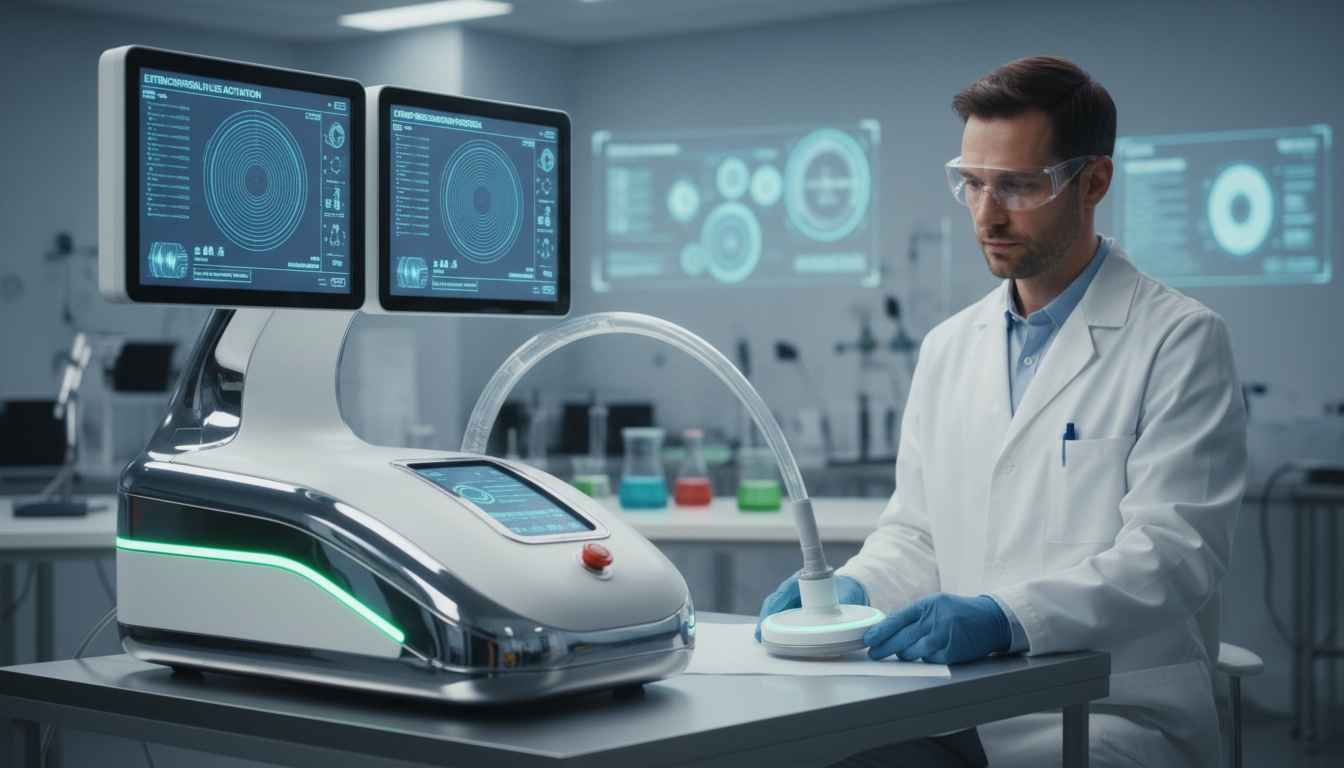
The early bird catches the worm. In the competitive landscape of medical device innovation, extracorporeal pulse activation technology (EPAT) has emerged as a transformative approach, reshaping therapeutic practices across multiple disciplines. Rooted in precise acoustic wave delivery, EPAT promises accelerated tissue repair, enhanced circulation, and pain mitigation without invasive procedures. Its application spans orthopedics, physiotherapy, dermatology, and even urology, highlighting a versatile potential for commercialization and clinical adoption.
Before diving into the business model canvas, it is crucial to acknowledge a potential conflict of interest: this article is written by a 3D printing and technology specialist with exposure to medical device prototyping and distribution. While insights are grounded in industry research, readers should consider complementary medical consultations for clinical decision-making.
Key Partners
EPAT development relies heavily on strategic collaborations. Key partners include medical device manufacturers, research institutions, clinical centers, and technology suppliers. Manufacturers provide the production capability for piezoelectric or electromagnetic pulse generators. Research institutions validate efficacy through clinical trials, offering peer-reviewed credibility that accelerates adoption. Collaboration with physiotherapy clinics and orthopedic hospitals ensures real-world feedback and adoption pathways. Additionally, software developers contribute to integrated treatment planning platforms, enabling practitioners to tailor pulse parameters to individual patient needs.
Strategic partnerships with insurance providers can facilitate reimbursement pathways, reducing barriers to adoption for end-users. Distribution partners, ranging from medical supply companies to online healthcare marketplaces, play a pivotal role in market penetration. In the rapidly evolving landscape of health technology, joint ventures with 3D printing companies can streamline prototyping, reduce lead times, and enable rapid customization of device components.
Key Activities
The operational backbone of EPAT revolves around research, development, clinical validation, and marketing. R&D is focused on optimizing pulse intensity, frequency modulation, and device ergonomics. Continuous clinical studies are crucial to generate efficacy data, identify contraindications, and refine protocols. Regulatory compliance, including FDA or CE certification, represents a critical activity, ensuring legal market entry and establishing practitioner confidence. Marketing initiatives, encompassing medical conferences, webinars, and targeted campaigns, drive awareness and adoption. For companies exploring direct-to-consumer models, digital marketing and patient education play an equally critical role.
Key Resources
Core resources include intellectual property, advanced manufacturing capabilities, clinical expertise, and software integration platforms. Patents protect pulse generation methodologies and device design, forming barriers to entry for competitors. Highly specialized teams, including biomedical engineers, clinical researchers, and regulatory specialists, ensure operational excellence. Manufacturing facilities equipped for precision electronics and high-tolerance components guarantee quality and reliability. Data analytics platforms, often integrated with AI, allow for personalized therapy and outcome tracking. These resources collectively underpin the scalability and credibility of EPAT solutions.
Value Propositions
EPAT offers a compelling value proposition rooted in non-invasive, targeted therapy. Patients benefit from reduced recovery times, minimized post-treatment complications, and improved functional outcomes. Clinicians gain access to evidence-based tools that enhance treatment efficacy and patient satisfaction. For healthcare institutions, EPAT devices offer cost-efficient alternatives to surgical interventions, potentially lowering long-term treatment expenses. The technology also enables repeated, controlled therapy sessions with quantifiable outcomes, creating a data-driven approach to treatment optimization. Beyond functional recovery, EPAT has shown potential in promoting tissue regeneration, angiogenesis, and collagen synthesis, offering additional therapeutic benefits that reinforce its value proposition.
Customer Relationships
Customer engagement is multi-layered. Healthcare practitioners require professional support, training, and ongoing clinical updates to maximize device efficacy. Institutions expect dedicated service contracts, maintenance protocols, and regulatory guidance. Patient-facing relationships revolve around education, adherence monitoring, and treatment follow-ups. Telemedicine integration can strengthen post-treatment support, allowing real-time tracking of progress and early identification of potential complications. Building trust through transparency, clinical evidence, and responsive service is essential for sustaining long-term adoption.
Customer Segments
Primary customer segments include orthopedic surgeons, physiotherapists, podiatrists, dermatologists, and urologists. Secondary segments comprise rehabilitation centers, sports medicine facilities, and aesthetic clinics. Patients seeking non-invasive alternatives for chronic pain management, tendon injuries, erectile dysfunction, or cellulite reduction form an indirect yet influential customer base. For technology-driven adoption, companies can segment customers by digital literacy, willingness to adopt innovative therapies, and insurance coverage, ensuring tailored marketing and training strategies. Companies like Compare Internet Providers illustrate how segmentation and localized service delivery enhance accessibility, a principle applicable to EPAT adoption as well.
Channels
Distribution channels include direct sales to medical institutions, partnerships with medical distributors, and online healthcare marketplaces. Trade shows and conferences serve as demonstration platforms, enabling hands-on experience and peer validation. Digital channels, such as webinars, online courses, and clinical portals, facilitate practitioner training and patient education. Integration with electronic medical records (EMR) and telehealth platforms enhances visibility and patient engagement. Selecting optimal channels requires balancing cost, reach, and credibility, ensuring that devices are both accessible and supported by authoritative clinical evidence.
Cost Structure
EPAT adoption entails a combination of fixed and variable costs. Fixed costs include R&D investment, patent filings, regulatory compliance, and manufacturing infrastructure. Variable costs cover materials, software updates, clinical training, marketing campaigns, and maintenance services. Insurance reimbursement strategies and volume-based procurement agreements can offset costs, making devices more attractive to healthcare institutions. Scalability depends on optimizing production workflows, reducing component costs through advanced manufacturing, and leveraging partnerships for distribution and service delivery. Accurate cost modeling is crucial for sustainable profitability and competitive pricing.
Revenue Streams
Revenue for EPAT solutions comes from multiple sources. Direct device sales to clinics and hospitals form the primary revenue stream. Consumables, software licensing, and maintenance contracts provide recurring revenue. Training programs, certification courses, and specialized therapy packages offer additional monetization opportunities. Some manufacturers explore subscription-based models, bundling device access with ongoing clinical support, data analytics, and software updates. Outcome-based pricing models, where payment is linked to patient recovery metrics, are emerging in high-value therapeutic segments, reflecting a shift toward performance-driven healthcare solutions.
Troubleshooting Common Issues
| Problem | Solution |
|---|---|
| Pain or discomfort during therapy | Adjust pulse intensity and treatment duration; ensure proper applicator positioning |
| Device calibration errors | Perform regular maintenance and software updates; consult technical support |
| Inconsistent treatment outcomes | Review patient selection criteria and adherence to treatment protocol |
| Regulatory compliance challenges | Engage regulatory consultants early; maintain thorough clinical documentation |
| High upfront costs for clinics | Offer leasing, financing, or outcome-based pricing models |
Potential Drawbacks
Despite its advantages, EPAT is not suitable for all patients. Contraindications include acute infections, tumors, or blood clotting disorders. Outcomes can vary depending on patient physiology, adherence to treatment, and comorbidities. High upfront costs may be prohibitive for smaller clinics or low-resource settings. Regulatory landscapes differ globally, potentially delaying market entry. Ethical considerations surrounding marketing claims must be addressed to avoid misrepresentation of efficacy. Transparency in communicating these limitations is essential for patient safety and professional integrity.
As EPAT continues to mature, continuous innovation, clinical validation, and stakeholder education will define its long-term success. The business model canvas offers a structured approach to navigate the complexities of commercialization, highlighting the interdependence of partners, resources, and market dynamics. By aligning operational excellence with clinical efficacy and patient-centered care, EPAT can establish itself as a cornerstone of non-invasive therapeutic technology.
